Repair or Replace Your Carrier AC in Arcadia, CA
Last updated 2026-06-13.
Up front: Arcadia Carrier HVAC weighs whether to repair or replace a Carrier AC across Arcadia 91007 and Lower Rancho with two tests: is the fix over half a new system, and is the unit past 12 years? Call (213) 766-5980 or book online; replacement runs $5,000 to $12,000 against repairs from $150 up.
Fast reference
- Rule 1 (50 percent): when the repair tops ~half of a replacement and the unit is over 10 to 12 years, replace.
- Rule 2 (age x cost): multiply unit age by repair cost; clear ~$5,000 and the case tips to replacement.
- Typical Arcadia AC service life in this heat: 12 to 17 years.
- Cheap repairs (capacitor, contactor $150 to $450) almost always win regardless of age.
- Compressor $1,200 to $3,500 and major leaks $225 to $1,500 are the decision points.
- Central AC replacement: $5,000 to $12,000. We show both numbers honestly.
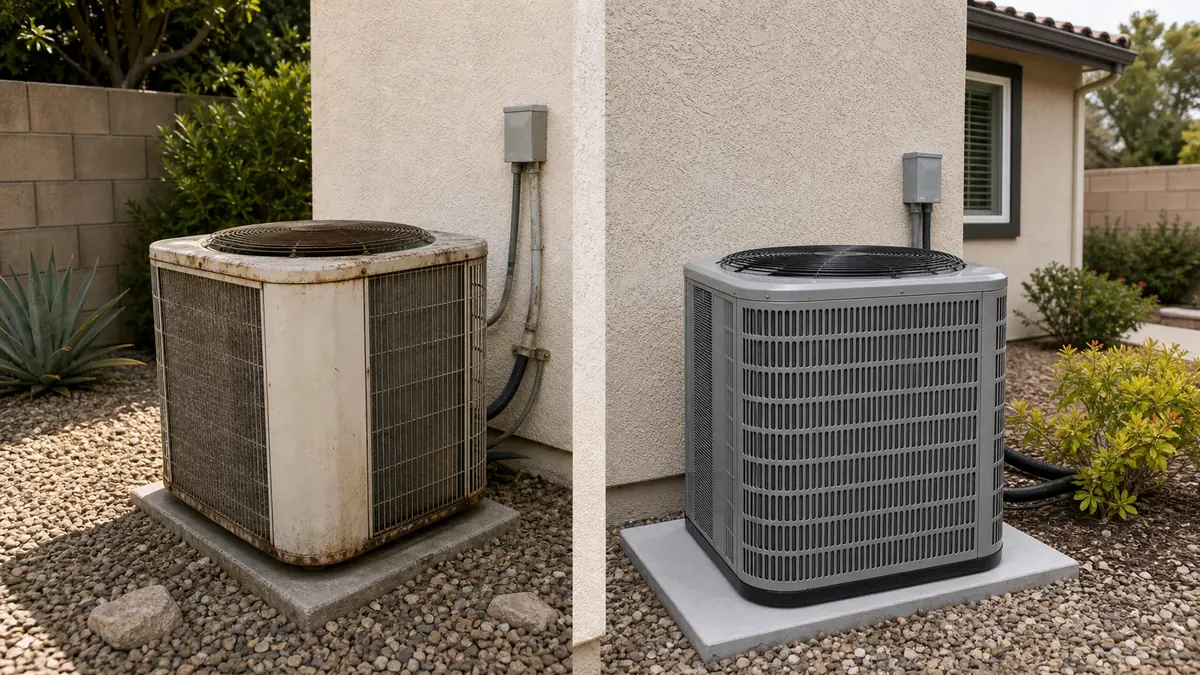
What are the two rules we actually use?
Skip the showroom pressure tactics; we rely on two defensible rules of thumb. Start with the 50 percent rule: a repair that exceeds roughly half the price of a comparable new system, on a unit already past about 10 to 12 years, usually means replacement is the wiser spend. Then run a fast sanity check by multiplying the unit's age in years against the repair cost - when that product runs well past $5,000, replacement is winning. A cheap fix trips neither rule. Put a $300 capacitor on a 14-year-old condenser and both tests come up short, so you just repair it. The two rules only fire together when an aging unit needs a costly sealed-system part.
Can you walk a worked example end to end?
Take a real-feeling Arcadia case. A 14-year-old Carrier Comfort condenser in Lower Rancho loses cooling in July; the diagnosis is a failed compressor, out of warranty. The repair quote is $2,800 (a compressor in the $1,200 to $3,500 band plus refrigerant and labor). A comparable correctly sized replacement system runs about $6,500 installed. Run rule one: $2,800 is 43 percent of $6,500 - close to the 50 percent line, and the unit is past 12 years. Run rule two: 14 years times $2,800 is far past $5,000. Both tests point the same direction, so replacement is the smarter spend - you would be putting nearly half a new system into a unit with maybe two or three summers of life left in this heat. Now change one variable: the same compressor failure on a 6-year-old unit still under Carrier's registered parts warranty. The part is covered, you pay labor only (often $600 to $1,200), both rules come up short, and repair through authorized service is clearly right. The math only tips to replacement when age and a costly sealed-system repair stack together.
How does the math play out on real Arcadia cases?
| Situation | Repair cost | 50% rule | Lean |
|---|---|---|---|
| 5-yr Performance, bad capacitor | $150 - $450 | Far under half | Repair |
| 9-yr Comfort, refrigerant leak + recharge | $225 - $1,500 | Under half | Repair, fix the leak |
| 14-yr Comfort, failed compressor (out of warranty) | $1,200 - $3,500 | Near or over half | Replace |
| 16-yr unit, control board + leak | $1,500 - $3,000+ | Over half on an old unit | Replace |
| Any unit, compressor under Carrier warranty | Labor only | Low out-of-pocket | Repair via authorized service |
Why does Arcadia's climate shorten the life?
A central AC in a mild coastal town can coast to 20 years because it barely runs. In Arcadia's Zone 9 foothill heat - 45 to 65 days a year at 90 F-plus and frequent 100 F-plus Santa Ana spikes - the compressor and condenser work hard for a long season every year, so realistic service life lands around 12 to 17 years. That heavier duty cycle is why a major repair on a 14-year-old Arcadia unit buys less remaining life than the same repair would in a cooler climate, and why the age threshold for replacement sits a little lower here.
How does Arcadia's housing split change the answer?
The right call also depends on which Arcadia you live in. On an older Lower Rancho or Baldwin Stocker ranch, the equipment, ductwork, and electrical panel often reach end of life together, so once the condenser hits the decision point it usually makes sense to address the whole system - a right-sized replacement plus duct sealing - rather than repairing one piece at a time. On a recent custom rebuild near Santa Anita Oaks, the equipment is newer and frequently still under warranty, so repair through authorized service is the default unless the unit was badly oversized at install, in which case replacement is the chance to correct the sizing with a proper Manual J calc. The decision is never just the unit in isolation; it is the unit, its age, its warranty, and the home around it.
What else tips the decision besides cost?
A few factors push borderline cases. Refrigerant phase-downs make recharging old leaky systems progressively more expensive, so an aging unit that needs sealed-system work buys less runway than it used to. When the current system was oversized and short cycles, swapping it out lets you correct the sizing with a proper Manual J calc instead of paying to patch a comfort problem that will keep coming back. If the ducts are failing too, bundling duct work with a new system is more efficient than doing it twice. And if you are planning to electrify off gas, a heat-pump replacement may capture a utility rebate that a like-for-like repair never could - verify the current program status first.
Which repairs are the real decision points?
Not every repair forces the question - only the big sealed-system and electrical-control jobs do. A failed dual-run capacitor or contactor ($150 to $450) is almost always a repair regardless of age; these are wear parts and the cheapest call we run. A blower or ECM motor ($450 to $2,300) is usually worth fixing unless the unit is already near the end. The genuine decision points are a failed compressor ($1,200 to $3,500), a major refrigerant leak with recharge ($225 to $1,500, higher if the coil itself leaks), and a communicating control or inverter board ($400 to $2,000) on an Infinity system. When one of those lands on a unit past 12 years, that is the moment to run both rules. The table below maps the common repairs to which lane they fall in.
| Repair | Typical 2026 lane | Usually means |
|---|---|---|
| Capacitor / contactor | $150 - $450 | Repair at any age |
| Refrigerant leak + recharge | $225 - $1,500 | Repair if young; decision point if old |
| Blower / ECM motor | $450 - $2,300 | Usually repair unless near end of life |
| Compressor (out of warranty) | $1,200 - $3,500 | Decision point past 12 years |
| Communicating / inverter board | $400 - $2,000 | Decision point on an aging Infinity |
What does the Carrier warranty change?
Warranty status can flip the entire decision, so check it first. Carrier's registered systems generally carry a 10-year parts warranty on major components when the unit was registered within the window after installation. If your compressor or coil is still inside that window, the expensive part is covered and you pay mostly labor - which drops a $2,800 compressor job to a few hundred dollars and makes repair the obvious answer even on rules that would otherwise lean toward replacement. The honest move when a unit is genuinely in warranty is to run the claim through Carrier's manufacturer-authorized service so the coverage stays intact; as an independent shop we will tell you when that is the right call rather than selling you a replacement you do not need. Out of warranty, the decision returns to the two rules and the cost lanes above. Either way, dig out your registration confirmation or install paperwork, or we can look the unit up by serial number.
When should I just repair?
Repair is the clear answer more often than the sales pitch suggests. If the unit is under about 10 years, if the fix is a capacitor, contactor, fan motor, or a minor leak, or if the compressor is still under Carrier's registered warranty (in which case the part runs through authorized service and you pay mostly labor), repair wins. We are an independent shop with no brand quota to hit, so when the right answer is a $250 repair on a system with years left, that is what we will tell you. When the numbers genuinely favor replacement, the buying guide helps you choose the right Carrier tier.
Bottom line: repair or replace
- Run two tests together: is the repair over half a new system, and is the unit past 12 years? Both firing means replace.
- Cheap wear parts - capacitor or contactor at $150 to $450 - are a repair at any age.
- The real decision points are a compressor ($1,200 to $3,500), a major leak ($225 to $1,500), or a board ($400 to $2,000) on an old unit.
- Check warranty first: an in-warranty compressor or coil flips the math toward repair through authorized service.
- Arcadia's Zone 9 heat shortens service life to about 12 to 17 years, so the age threshold sits a little lower here.
- If you replace, right-size with a Manual J calc and bundle duct work rather than patching the same comfort problem twice.
Common questions
At what age should I replace a Carrier AC in Arcadia?
In Arcadia's punishing cooling climate a central AC typically lasts 12 to 17 years. Once a unit is beyond roughly 12, a big-ticket repair such as a compressor or a serious leak usually pushes the math toward a new system. Below 10 years, repairing almost always comes out ahead unless the compressor died out of warranty. What forces the decision is never age by itself; it is age paired with what the repair costs.
What is the 50 percent rule for AC replacement?
When a repair would run past roughly half of what a comparable new system costs, and the equipment is already old, replacing it is normally the smarter outlay. A $2,000 compressor on a 14-year-old unit that costs $5,500 to swap out clears that line; a $300 capacitor on the very same unit does not. We lay both figures on the table instead of steering you to the larger ticket.
Does R-410A refrigerant being phased out affect my decision?
It can. Older systems use refrigerants that are being phased down, so recharging a leaky old unit gets more expensive over time, and a major sealed-system repair on aging equipment buys you less runway than it used to. That shifts borderline cases toward replacement, but it does not mean you must replace a healthy system today.
Is it worth replacing if I am also planning to electrify off gas?
Sometimes, yes. If your AC is at the decision point and you want to move off gas heat, replacing the condenser with a Carrier heat pump covers cooling and heating in one system and may capture a utility rebate that a like-for-like AC repair never could. Arcadia's mild winters mean you do not need a cold-climate model, and many homeowners keep the existing furnace as a dual-fuel backup. Verify the current rebate status before counting on a figure, since programs shift and some pools ran dry in early 2026.
Should I replace the ducts when I replace the AC?
Often it is the smarter sequence. On Arcadia's tight 1950s ranch ductwork, a new high-efficiency Carrier system only delivers its rated SEER2 if the ducts move air at low static pressure, so bundling duct sealing and return corrections with the new system beats paying to open the home twice. If the old system was oversized and short cycling, replacement is also the moment to right-size with a Manual J calc instead of patching the same comfort problem again.
Related: Carrier buying guide, AC repair, Comfort Series, and maintenance plans.