Carrier System Buying Guide for Arcadia, CA
Last updated 2026-06-13.
Up front: Arcadia Carrier HVAC matches the Infinity, Performance, or Comfort tier to your home's size and load across Arcadia 91006 and Santa Anita Oaks, with tonnage set by a Manual J calc. Call (213) 766-5980 or book online; installs run $5,000 to $16,000 by tier, all held to Southwest-region SEER2 and Title-24.
Fast reference
- Carrier tiers: Infinity (premium variable-speed), Performance (mid), Comfort (value).
- Southwest-region floors: under 45,000 BTU it is 14.3 SEER2, at/above it is 13.8 SEER2; heat pumps need 14.3 SEER2 with 7.5 HSPF2.
- In Zone 9, Title-24 commonly calls for HERS-verified duct sealing alongside charge and airflow verification.
- Install lanes: AC $5,000 to $12,000; heat pump $6,000 to $16,000; furnace $3,000 to $7,500.
- The federal 25C heat-pump credit closed on 12/31/2025, so a 2026 install carries no federal credit.
- LADWP, SCE, SoCalGas, and TECH amounts move around and can run dry - confirm the current status before relying on one.
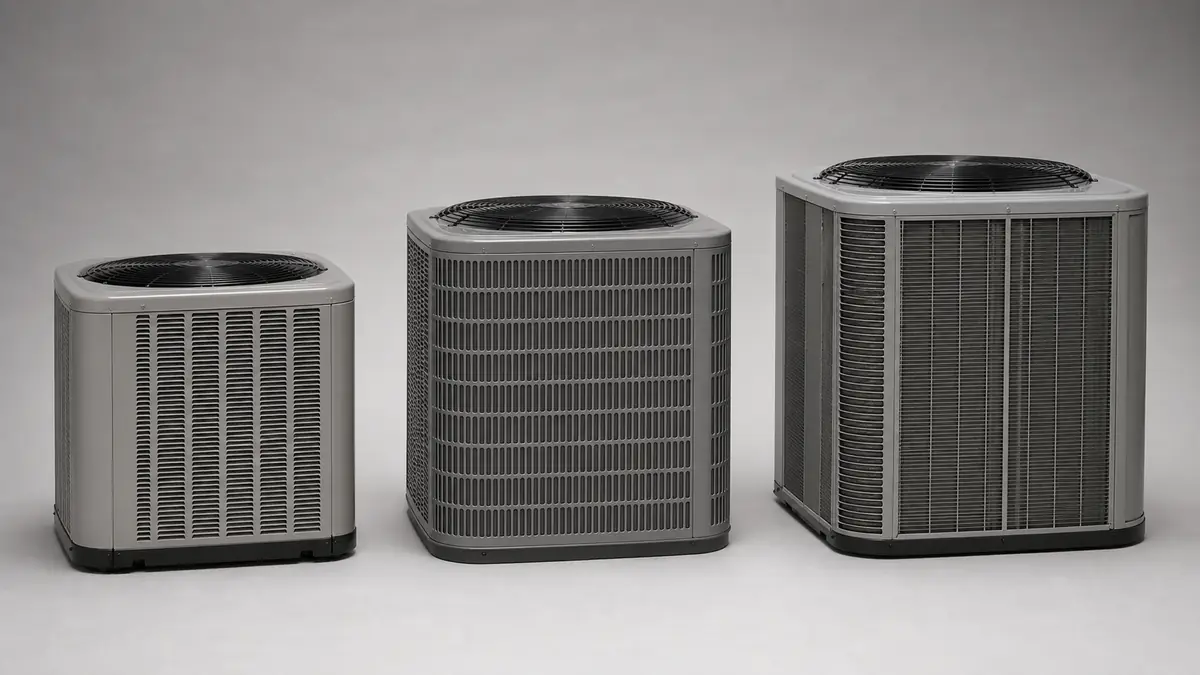
How do I choose between Infinity, Performance, and Comfort?
The honest answer is to match the equipment to the house, not to buy the most expensive tier. Carrier sells three levels: Infinity is the premium variable-speed line with Greenspeed Intelligence, Performance is the two-stage and single-stage mid-tier, and Comfort is the value single-stage line. In Arcadia, the right choice tracks the housing stock - a large custom rebuild and a modest ranch genuinely need different systems.
| Home type | Best-fit tier | Example models | Install lane |
|---|---|---|---|
| Large mansionized rebuild, zoned | Infinity Greenspeed | 24VNA6, 25VNA4, 59MN7 | $8,000 - $16,000+ |
| Mid-large estate replacement | Performance two-stage | 26TPA8, 27TPA8, 59TP6 | $6,000 - $11,000 |
| Modest ranch / smaller home | Performance or Comfort single-stage | 26SPA6, 26SCA5, 59SC6 | $5,000 - $9,000 |
| Rental / tight budget | Comfort value | 26SCA4, 27SCA5 | $5,000 - $8,000 |
What SEER2 and code rules apply in Arcadia?
Arcadia sits in the DOE Southwest region, which the federal rules treat as the strictest cooling zone in the nation. Since the SEER2 changeover that took effect January 1, 2023, a split-system air conditioner has to reach 14.3 SEER2 / 11.7 EER2 below 45,000 BTU, or 13.8 SEER2 / 11.2 EER2 once it reaches 45,000 BTU and up, while a split air-source heat pump has to land at 14.3 SEER2 and 7.5 HSPF2. Those are the equipment floors; layered above them is California Title 24, Part 6, the energy code that governs any new or altered HVAC. Locally that matters because Arcadia is cooling-dominant Climate Zone 9, where most duct alterations draw a HERS field-verification requirement for duct sealing, new and replacement split systems usually owe refrigerant-charge and airflow verification, and the baseline keeps tilting toward heat-pump-ready and heat-pump-preferred design. Each code cycle ratchets these tighter, so verify the current minimum and the verification triggers for your equipment class before you lean on any compliance claim.
Does higher SEER2 pay off here?
In Zone 9, where the cooling season is long and 90 F-plus days pile up, efficiency does more work than it would on the coast - but there is a point of diminishing returns. Stepping up off the 14.3 SEER2 floor to a mid-tier 16-to-18 SEER2 system usually pays for itself across the equipment's lifespan. Pushing to a 24-to-26 SEER variable-speed Greenspeed unit is worth it primarily for the comfort, quiet, and zoning on a large home, not purely the energy savings. The biggest efficiency lever on many Arcadia homes is not the condenser at all - it is sealing leaky ducts and fixing undersized returns so the rated system can actually breathe.
What about rebates and tax credits in 2026?
Stale advice burns buyers here more than anywhere, so let us be blunt about it. The federal Energy Efficient Home Improvement Credit, Section 25C, used to return 30 percent up to $2,000 on a heat pump, but it was repealed as of December 31, 2025; if the equipment was bought and installed on or before that date you can still claim it on the 2025 return, and not otherwise. For anything installed in 2026 the federal 25C credit simply does not exist. Utility programs, on the other hand, are still around but in constant flux:
| Program | Reported amount | Caveat |
|---|---|---|
| LADWP heat-pump rebate | Up to ~$2,500 per ton, tiered by efficiency | Confirm your electric utility and current tiers |
| SCE heat-pump HVAC | ~$1,000 per qualifying system | Up to two systems per home; verify status |
| SoCalGas HEER furnace | Up to ~$600 (92%+ AFUE); ~$50 thermostat | Changes by program year |
| TECH Clean California | ~$1,000 to $1,500 single-family heat pump | Funds reported fully reserved early 2026; waitlist |
We will not bake a promised rebate into a quote. What we will do is name the programs that might fit, and then one of us checks the live figure and funding straight with the utility before you commit.
How is the right tonnage actually set?
Tonnage is where most Arcadia buying mistakes happen, and bigger is not better. The honest method is a Manual J load calculation that accounts for the home's square footage, insulation, window area and orientation, ceiling height, and the Zone 9 design temperature - not a rule-of-thumb 1 ton per 400 or 600 square feet. Oversizing is the failure chain that produces short cycling: a condenser too large for the load races the thermostat to setpoint in a few minutes, cuts out before it pulls humidity from the air, then restarts, leaving rooms clammy and stacking start cycles on the compressor. Undersizing is the rarer mistake here, and it shows up as a system that runs nonstop and still cannot hold setpoint on a 100 F afternoon. A correct Carrier match - condenser, indoor coil, and air handler all sized together - runs longer, quieter cycles that dehumidify and even out the temperature across the house. On a variable-speed Infinity Greenspeed system the modulation from roughly 25 to 100 percent forgives small sizing errors, but it is no substitute for the load calc; if you read more on how oversizing plays out, the short cycling page walks the diagnostic side.
Which furnace tier fits a mild Arcadia winter?
Arcadia's heating load is light, so the furnace decision is different from the AC decision. Many ranch homes here run perfectly well on an 80 percent AFUE 58-series furnace (for example the 58TP or 58SC family), which is common and adequate in mild SoCal because the furnace runs only a few months a year and gently. Stepping up to a 96 to 98 percent condensing furnace - the 59SC6 Comfort, 59TP6 Performance, or the modulating 59MN7 Infinity - pays back more slowly here than in a cold climate, so it makes the most sense when you are already opening the system for a full replacement, want the variable-speed ECM blower's quiet airflow, or are matching it to an Infinity AC for communicating control. California's Ultra-Low NOx rules also steer furnace selection, and Carrier offers Low NOx variants across the tiers. If you are weighing whether to keep gas heat at all, a heat pump may be the better path - see below.
Gas furnace, heat pump, or dual fuel?
Arcadia's mild winters make this an easy call for most homes: a heat pump covers cooling and heating on electricity, and because the heating load is light you do not need a cold-climate model. Many homeowners keep the existing gas furnace as a dual-fuel backup for the coldest mornings, getting heat-pump efficiency most of the time and gas heat on the rare deep-cold day. If you are replacing only the AC and the furnace is healthy, a straight Carrier condenser swap is simplest. California code is steadily nudging toward heat pumps, so it is worth pricing both paths. See Carrier heat pumps for the model breakdown.
What does the Infinity System Control add?
If you buy into the Infinity tier, the communicating Infinity System Control is not an optional accessory - it is what unlocks the equipment. Greenspeed variable-speed modulation from roughly 25 to 100 percent only works when the touchscreen control is talking to the indoor and outdoor boards over the A-B-C-D communication wiring, and that same link surfaces full numeric and plain-language diagnostics, including the 178 and 179 communication fault codes and airflow code 44. On a Performance or Comfort system a standard non-communicating thermostat is fine and keeps the cost down. The practical takeaway: pay for the Infinity control only when you are buying Greenspeed equipment and zoning that genuinely use it, and do not let a quote pair a premium variable-speed condenser with a basic thermostat that strands its best features.
What should a good Arcadia quote include?
A quote worth trusting puts the Manual J load calculation on paper, names the exact Carrier model numbers with the matched indoor coil and air handler instead of a lone condenser, states the rated SEER2 of the whole system, documents the duct assessment and any sealing, spells out the Title-24 HERS verification that applies, includes the permit, and prices the job without folding in a phantom rebate. If a quote is a single round number with an oversized unit and a "limited-time rebate," be skeptical. The repair-or-replace guide helps you decide whether to buy at all.
Bottom line on choosing a Carrier system
- Match the tier to the house: Infinity Greenspeed for large zoned rebuilds, Performance two-stage for mid-size estates, Comfort single-stage for modest ranch homes and rentals.
- Set tonnage with a Manual J load calc, not a square-footage rule of thumb - oversizing causes short cycling.
- Southwest-region floors: 14.3 SEER2 under 45,000 BTU, 13.8 SEER2 at or above, and 14.3 SEER2 with 7.5 HSPF2 for a split heat pump.
- Buy the Infinity System Control only with Greenspeed equipment that uses its modulation and diagnostics.
- Sealing leaky ducts and fixing returns often beats stepping up the condenser's SEER2 number.
- The federal 25C credit ended 12/31/2025; verify any utility rebate's live amount and funding before relying on it.
Common questions
Which Carrier tier should I buy for an Arcadia home?
Match the tier to the house. A large mansionized rebuild with zoning earns variable-speed Infinity Greenspeed; a mid-size estate replacement is well served by two-stage Performance; a modest ranch or rental does fine on a correctly sized single-stage Comfort unit. Paying for variable-speed comfort a small single-story cannot use is the most common Arcadia overspend.
What SEER2 do I need to buy in Arcadia, CA?
Because Arcadia falls inside the DOE Southwest region, the toughest cooling tier in the country, your floor is higher than most states. A split-system AC under 45,000 BTU has to reach 14.3 SEER2 / 11.7 EER2; once you hit 45,000 BTU and up the bar drops slightly to 13.8 SEER2 / 11.2 EER2, and a split heat pump has to clear 14.3 SEER2 together with 7.5 HSPF2. A correctly matched new Carrier system clears those numbers.
Are there HVAC rebates in Arcadia in 2026?
Maybe, but treat any figure as unconfirmed until you check. Programs have run through LADWP, SCE, SoCalGas, and TECH Clean California, yet the dollar amounts shift and the TECH single-family pool was reported fully reserved across the state in early 2026. One thing is settled: the federal 25C credit ended on December 31, 2025, which leaves no federal heat-pump credit available for a 2026 install.
Should I replace the ducts when I buy a new Carrier system?
Often, at least partly. A high-efficiency Carrier system only hits its rated SEER2 if the ducts move air at the low static pressure the rating assumes. On Arcadia's tight 1950s ranch ductwork, sealing and correcting returns is frequently the difference between rated performance and a system that disappoints. We assess the ducts as part of any quote.
Related: Infinity Greenspeed, Performance Series, repair or replace, and duct repair.